
Sovereign Digital Economy Reference Model
- Vikrant Patel

- Mar 12
- 8 min read
A Structural Framework for National Digital Capability
Author: Vikrant Patel
Published: March 2026
© Ojas Design Ltd 2026
Overview:
Digital infrastructure, artificial intelligence systems, data platforms, and digital marketplaces increasingly mediate economic activity across modern economies.
For governments, this transformation introduces both opportunity and strategic dependency. Critical capabilities in cloud infrastructure, AI services, and digital platforms are often concentrated among a small number of global providers, raising important questions around economic sovereignty, resilience, and governance.
The Sovereign Digital Economy Reference Model introduces a structural framework for understanding how national digital capability can be organised, governed, and developed.
Rather than viewing digital transformation as a series of isolated programmes, the model approaches the digital economy as an integrated architecture comprising:
• Infrastructure foundations• Intelligence capabilities• Digital economic platforms• Governance and trust frameworks
At the centre of this architecture sits the Sovereign Business Operating System (SBOS), an orchestration framework describing how infrastructure, intelligence systems, governance institutions, and digital platforms interact across the national digital economy.
Developed as part of the ojas.design research programme into national digital economic systems, this paper provides policymakers, institutions, and strategy leaders with a structured vocabulary for analysing national digital capability and designing coherent digital economy strategies.
Full Report:
Sovereign Digital Economy Reference Model
A Structural Framework for National Digital Capability
Forward:
Digital infrastructure has become a central element of national economic capability, underscoring its critical role in shaping a resilient and competitive economy. Recognising this importance can inspire policymakers to prioritise strategic investments and policies.
Digital infrastructure is rapidly becoming one of the defining strategic assets of modern economies.
Critical capabilities in cloud computing, artificial intelligence infrastructure, data storage, and software services are increasingly concentrated among a small number of international providers, raising strategic concerns about sovereignty and control that require deliberate policy action.
This concentration raises material questions about economic sovereignty, resilience, regulatory authority, and the retention of economic value within national economies.
Governments increasingly recognise that isolated digital transformation programmes are insufficient. What is required is a coherent architectural understanding of the digital economy, allowing national digital strategy, infrastructure investment, regulatory design, and innovation policy to be coordinated across a common structural framework.
At the centre of the framework is the concept of the Sovereign Business Operating System (SBOS), which serves as the key orchestration architecture, ensuring strategic coordination of infrastructure, intelligence capabilities, governance systems, and economic platforms across the national economy, while keeping the focus on integrated digital governance.
This paper introduces the Sovereign Digital Economy Reference Model, a structural framework designed to guide policymakers in understanding, designing, and governing national digital capability, thereby supporting strategic development and policy formulation for sovereign digital economies.
EXECUTIVE SUMMARY
National economies are undergoing a structural transformation. Digital platforms, cloud infrastructure, artificial intelligence systems, and data ecosystems now mediate an increasing share of economic activity.
For governments, this shift introduces both opportunity and dependency.
Nations that develop coherent sovereign digital capabilities will be better positioned to:
Compete in global digital markets
Regulate digital platforms effectively
Support domestic innovation ecosystems
Retain economic value generated within their borders
Ensure long-term technological resilience
The Sovereign Digital Economy Reference Model provides a structural framework for understanding the architecture of national digital capability.
The model organises the sovereign digital economy into three primary domains:
Foundations: Infrastructure capabilities supporting the digital economy.
Intelligence: Data and computational systems that generate insight and automate.
Economy: Digital platforms and ecosystems through which economic value is created and exchanged.
Operating across these domains is a horizontal National Data and Trust Fabric that provides the institutional and technical mechanisms required for trusted digital interaction.
At the centre of this architecture sits the Sovereign Business Operating System (SBOS), an orchestration framework that coordinates infrastructure, intelligence capability, governance, and economic platforms into a coherent national system.
ONE-PAGE FRAMEWORK OVERVIEW
The Sovereign Digital Economy Reference Model describes the digital economy as an integrated system comprising infrastructure, intelligence capability, economic platforms, and governance frameworks.
At the centre of this system sits the Sovereign Business Operating System (SBOS), the orchestration architecture that coordinates these domains across the national digital economy.
The model provides policymakers with a structured vocabulary for analysing national digital capability and designing coherent digital economy strategies.
The SBOS reference architecture illustrates how these domains combine to form the operational architecture of a sovereign digital economy.
The Three Structural Domains

National Data and Trust Fabric
Operating across all domains is the National Data and Trust Fabric, comprising:
digital identity frameworks
data governance systems
cybersecurity coordination
interoperability standards
digital regulatory frameworks
This trust architecture enables secure digital interaction across public and private systems.

Figure 1 — Sovereign Business Operating System (SBOS) Reference Architecture
THE STRUCTURAL SHIFT TO DIGITAL ECONOMIES
Over the past two decades, the architecture of economic activity has shifted fundamentally toward digital systems.
Cloud infrastructure now supports critical functions across public administration, financial services, healthcare, logistics, and communications. Digital marketplaces have restructured retail, media, and service distribution. Artificial intelligence systems are beginning to reshape professional services, manufacturing, and public sector delivery.
Software ecosystems now underpin the operational continuity of enterprises across almost every sector of the economy.
Economic activity is increasingly mediated through digital platforms and infrastructure.
Cloud services, AI systems, digital marketplaces, and software ecosystems now constitute the operating environment for a significant and growing share of national economic output.
THE DEPENDENCY QUESTION
This transformation has been accompanied by significant consolidation within global technology ecosystems.
A relatively small number of global technology providers now supply the cloud infrastructure, artificial intelligence services, software platforms, and digital marketplaces upon which substantial portions of national economies depend.
National digital dependency can take several forms.
Infrastructure dependency: Reliance on external hyperscale cloud providers for critical computing infrastructure.
Economic dependency Platform ownership structures that capture a substantial share of economic value generated by domestic digital activity.
Governance dependency: Limited regulatory leverage over foreign jurisdiction platforms providing essential digital services within national markets.
Data dependency: Strategically valuable national data stored or processed outside national jurisdiction.
These dependencies do not imply that global digital platforms are inherently problematic. They deliver significant innovation capability, economic efficiency, and international market access.
However, governments must understand the structural implications of these dependencies to design effective policy responses.
FROM DIGITAL TRANSFORMATION TO DIGITAL ARCHITECTURE
Most governments have approached digital capability through the lens of transformation, improving individual services or modernising specific administrative systems.
While these initiatives can deliver important operational improvements, they do not necessarily produce the integrated structural capability required for a sovereign digital economy.
Isolated digital programmes often lead to fragmented systems, inconsistent data governance, redundant infrastructure, and limited interoperability between public and private systems.
A more strategically productive framing is architectural.
Rather than asking which individual services should be digitised, governments must consider how the digital economy as a whole should be structured, governed, and coordinated.
The Sovereign Digital Economy Reference Model provides a structural framework for addressing that challenge.
SOVEREIGN DIGITAL ECONOMY ARCHITECTURE
The digital economy can be understood as a layered system in which economic participants interact through digital platforms supported by infrastructure, intelligence capability, and governance frameworks.

Figure 2 — Sovereign Digital Economy Architecture
This conceptual architecture illustrates the relationships between:
economic participants (citizens, businesses, institutions, government)
digital services and platforms enabling economic activity
infrastructure and computational systems supporting these services
governance frameworks ensuring trust, regulation, and interoperability.
THE SOVEREIGN BUSINESS OPERATING SYSTEM
The Sovereign Business Operating System (SBOS) represents the orchestration architecture of the sovereign digital economy.
It describes how national digital infrastructure, intelligence capabilities, governance frameworks, and economic platforms interact as a coherent system.
SBOS is not a single technology platform.
Rather, it is a reference architecture describing how digital systems across the economy are structured, connected, and governed.
Just as a computer operating system coordinates hardware resources, software applications, and user interaction, the SBOS coordinates infrastructure systems, intelligence capabilities, governance institutions, and economic platforms within the national digital environment.
Through this orchestration role, SBOS enables:
infrastructure resources to be shared efficiently
trusted data exchange across sectors
coordinated digital regulation across markets
innovation ecosystems to develop on shared national platforms
SBOS ORCHESTRATION ARCHITECTURE
While the stacked architecture illustrates the structural layers of national digital capability, the orchestration architecture illustrates how these systems interact operationally.

Figure 3 — SBOS Orchestration Architecture
The orchestration layer enables:
trusted digital identity verification
secure cross-sector data exchange
interoperability between digital platforms
regulatory oversight across digital markets
coordinated operation of infrastructure systems
Through this orchestration capability, the sovereign digital economy functions as an integrated system rather than a fragmented collection of digital platforms.
SYSTEM TAXONOMY OF THE SOVEREIGN DIGITAL ECONOMY
The SBOS framework can also be understood through a classification of the system categories that constitute a sovereign digital economy.
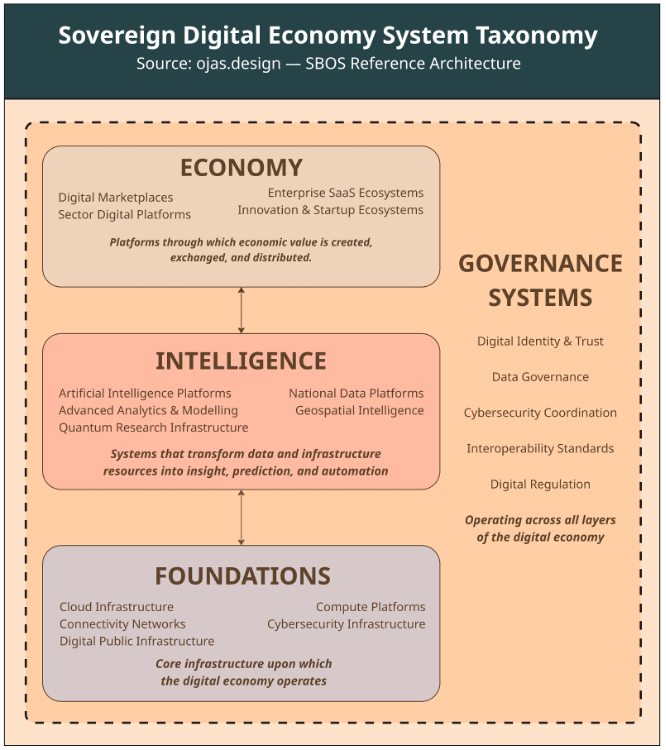
Figure 4 — Sovereign Digital Economy System Taxonomy
The taxonomy distinguishes four major categories of digital economy systems:
Infrastructure Systems Cloud platforms, connectivity networks, data centres, and cybersecurity infrastructure.
Platform Systems Digital identity systems, financial infrastructure platforms, government service platforms, and sector platforms.
Intelligence Systems AI infrastructure, national data platforms, analytics systems, geospatial intelligence, and research computing capability.
Governance Systems Regulatory institutions, digital policy frameworks, cybersecurity authorities, and participation in international digital standards.
This classification enables governments to map existing digital capability and identify structural dependencies.
IMPLICATIONS FOR NATIONAL POLICY
The emergence of platform-mediated digital economies introduces several strategic considerations for governments.
While appropriate policy responses will vary by national context, the Sovereign Digital Economy Reference Model highlights several areas where coordinated policy development may be required.
Strategic Digital Infrastructure: Digital infrastructure increasingly functions as critical national infrastructure. Governments should consider the resilience of cloud infrastructure, data centre capacity, connectivity networks, and cybersecurity systems.
National Data Capability: Data governance frameworks and national data infrastructure are essential for enabling innovation while protecting sensitive economic and public sector information.
Artificial Intelligence Capability: AI systems are becoming foundational to economic competitiveness. Governments may need to develop national AI infrastructure, research capability, and governance frameworks.
Digital Platform Ecosystems: Digital platforms increasingly shape market structure across sectors. Governments must consider competition dynamics, interoperability requirements, and domestic ecosystem development.
Coordinated Digital Governance: Effective digital governance requires alignment across data protection, cybersecurity, competition policy, and AI regulation.
The SBOS framework highlights the importance of coordinating these functions across a coherent national digital architecture.
LIMITATIONS OF THE MODEL
The Sovereign Digital Economy Reference Model is intended as an analytical framework rather than a prescriptive technology blueprint.
The model:
does not prescribe specific technologies
does not imply national technological self-sufficiency
is not a digital maturity model
must be adapted to the national context
Its purpose is to support structured policy dialogue and coordinated digital capability development.
CONCLUSION: A FRAMEWORK FOR POLICY DIALOGUE
The digital economy is becoming a foundational component of national economic capability. Infrastructure, data systems, artificial intelligence, and digital platforms now mediate an increasing share of economic activity across both public and private sectors.
As this transformation accelerates, governments face the challenge of understanding how these systems interact and of structuring national digital capability to support economic resilience, innovation, and effective governance.
The Sovereign Digital Economy Reference Model is intended as a framework for addressing that challenge.
By describing the digital economy as an integrated system of infrastructure, intelligence capability, economic platforms, and governance frameworks, the model provides policymakers with a structured way to analyse national digital capability and to design coordinated digital economy strategies.
The Sovereign Business Operating System architecture further highlights the importance of orchestration: the mechanisms through which infrastructure, platforms, and governance systems operate as a coherent national digital environment.
Different nations will implement these capabilities in different ways, reflecting their institutional structures, economic priorities, and technological ecosystems.
However, the underlying architectural challenge remains common.
Governments increasingly need a coherent understanding of how digital infrastructure, data capability, artificial intelligence systems, and digital platforms interact within the national economy.
The Sovereign Digital Economy Reference Model is intended to support that understanding and to contribute to ongoing policy dialogue on the architecture of sovereign digital capability.
Discuss Sovereign Digital Strategy
Governments and institutions increasingly recognise that digital capability must be approached as a national architecture rather than a collection of isolated programmes.
ojas.design works with government departments, national institutions, and strategic programmes to translate digital policy ambition into operational capability, infrastructure strategy, and coordinated digital governance.
If your organisation is exploring sovereign digital capability, national AI infrastructure, or digital economy architecture, we welcome the opportunity to discuss.


Comments